
Before the Launch: Five Keys to Successful Change
By Dr. Mary Lippitt, author of Leadersheep Saving the Herd

The pace of change keeps accelerating. In 2016, employees experienced an average of two major organizational changes a year. By 2025, that number had risen dramatically. With all that experience, we might assume organizations have learned how to implement change successfully. Unfortunately, change initiatives continue to disappoint or derail.
Clearly, we need to rethink how we approach change.
Change is much like looking through a kaleidoscope. Many moving parts are at play, and nothing remains static or entirely predictable. One small twist can alter the entire configuration and reveal a new reality.
The same is true of organizational change. Conditions shift, priorities evolve, and new information surfaces. Holding too tightly to the original plan can quickly become a liability.
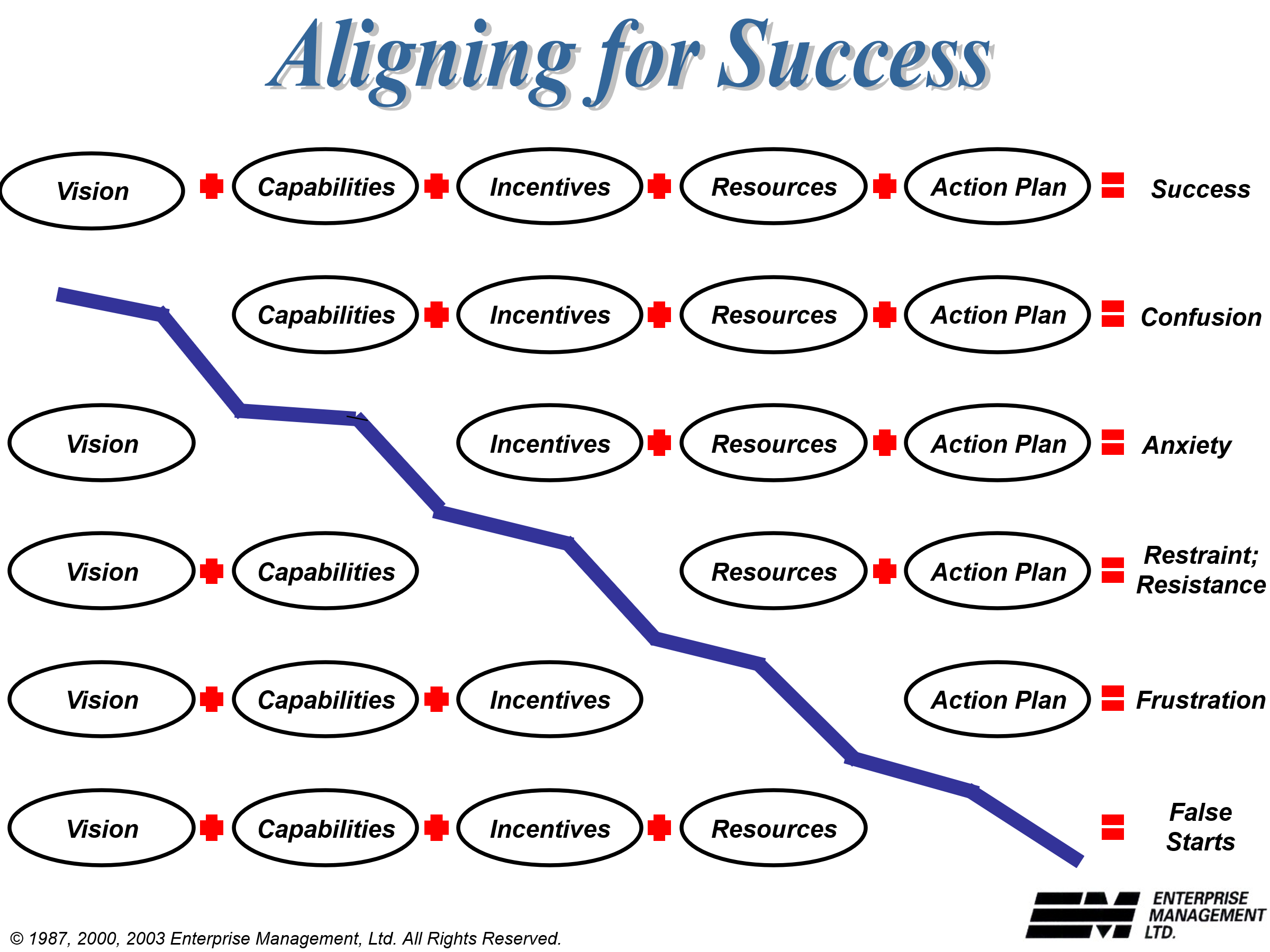
The Aligning for Success Matrix provides a practical way to navigate that complexity. It focuses attention on five components required for successful execution:
Vision — Do people understand what is changing and why?
Capabilities — Do they have the knowledge and skills required?
Incentives — Do they see value in supporting the change?
Resources — Do they have the time, tools, and support they need?
Action Planning — Are responsibilities, milestones, measures, and next steps clear?
These components need attention from the beginning, but they are not a one-time checklist. Each can shift as implementation progresses.
I wish the KISS principle always applied, but successful change is rarely simple. New issues emerge, interdependencies shift, and assumptions that once seemed sound may no longer fit.
When more than one component needs attention, work across the matrix rather than searching for a single solution. And can’t assume that once you address a component, it will remain resolved. Each needs constant monitoring and adjustment.
Change has never been a quick fix. But complexity does not have to mean chaos. A systematic framework helps leaders identify what has shifted, determine what needs attention, and adjust before problems derail execution.
Successful change is not about getting the plan right once. It is about continually reading the situation, adjusting the plan, and aligning the five components to deliver desired results.