
By Dr. Mary Lippitt, Enterprise Management LTD
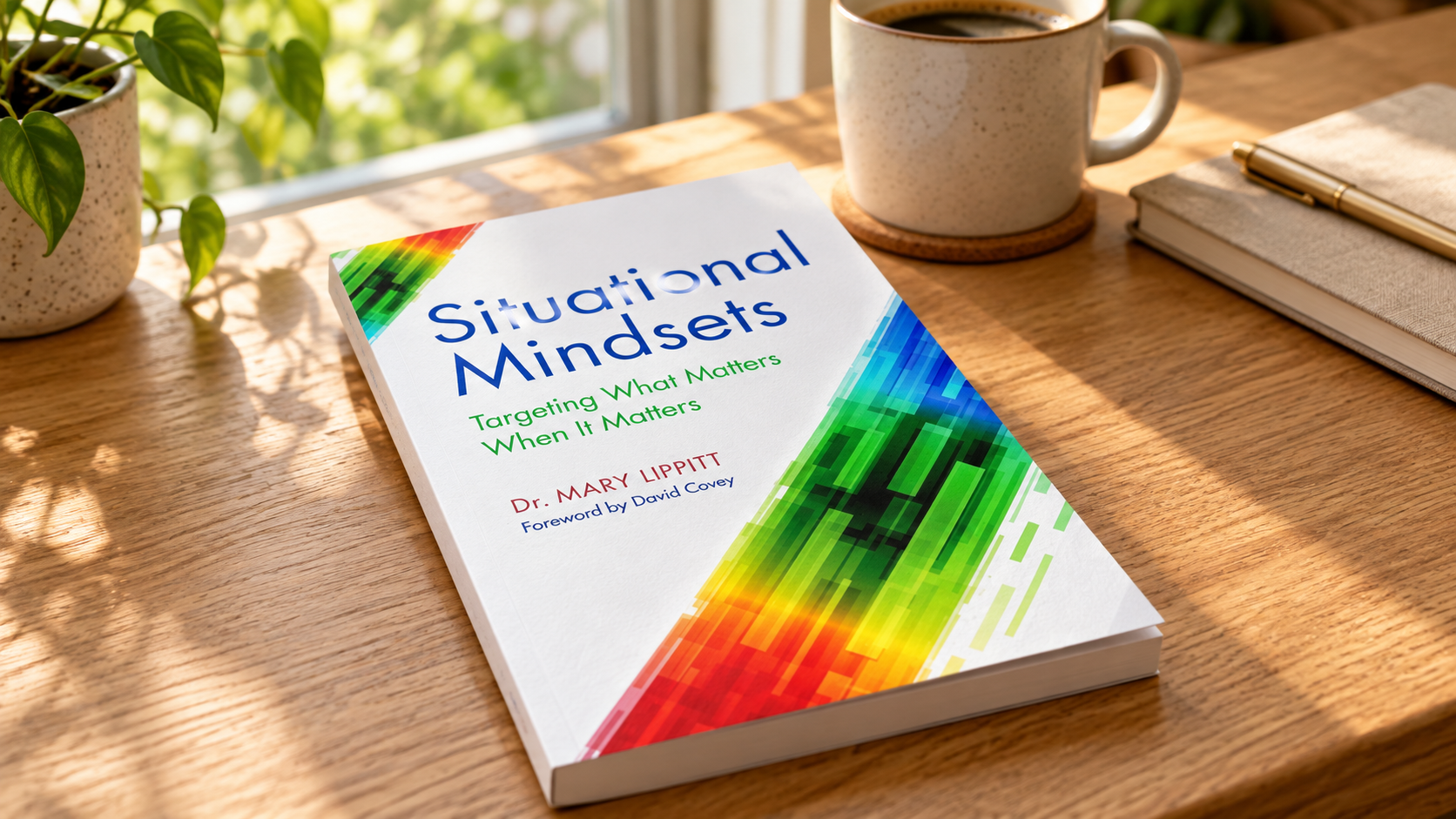
Have you ever jumped into action, confident in your decision, only to discover that missing information turned a promising outcome into a disappointment? In a rapidly changing world, even experienced leaders can overlook something critical. Situational Mindsets offer a structured way to broaden our view before we act.
“Mindset” has many definitions, with significantly different focal points. Common approaches include:
Viewing life with optimism or doubt
Anticipating how others will respond to information or an event
Believing that adults’ abilities can develop or are largely fixed
Seeing change as an opportunity or a threat
Adopting a groups or culture’s prevailing assumptions
Scanning the environment and examining different aspects of an organization before making a business decision
Many of these approaches reflect fixed responses. Familiarity saves effort and helps us move efficiently. Try brushing your teeth with your other hand, and you’ll quickly appreciate the value of an ingrained routine.
As you review these mindset approaches you will notice that most have a consistent response saving energy and improving efficiency. We have ingrained assumptions and practices. Just try brushing your teeth with your other hand and you will recognize the advantages ingrained practices.
But there is a drawback to using long standing viewpoints and habitual thinking: is the impacts of change. When circumstances change, we need additional information and flexibility.
Better decision stem from open questions and analysis
Before committing time, money, and effort, give your team a chance to see the bigger picture.
Engineers and surgeons use checklists to prevent critical omissions. Leaders can bring similar discipline to their decisions by analyzing a situation through six distinct perspectives. These include whether it is critical to target:
Extending current offerings or services
Gaining and retaining customers
Developing operating structure and policy
Improving quality, execution, and financial success
Enhancing a change ready culture, talents, and workforce planning
Identifying how to adapt to trends, opportunities and technology
Each perspective brings different information into view. Together, they help leaders identify connections, weigh tradeoffs, and set priorities.
In our research, 45% of participants focused on only one Situational Mindset, and another 31% used two. That raises three important questions: What might we be missing? What are we assuming? What more do we need to know?
No one has every answer. But we can ask questions that uncover information, challenge assumptions, and improve our decisions.
Start with a decision your team is facing. Build a checklist of questions, then review it through all six Situational Mindsets. What deserves a closer look before you act?
Each perspective brings different information into view. Together, they help leaders identify connections, evaluate risks, and set priorities.
In our research, 45% of participants focused on only one Situational Mindset, and another 31% used two. That raises three important questions: What might we be missing? What are we assuming? What more do we need to know?
No one has every answer. But we can ask questions that uncover information, challenge assumptions, and improve our decisions.
Start with a decision your team is facing. Build a checklist of questions, then review it through all six Situational Mindsets. What deserves a closer look before you act?
Want to explore the six Situational Mindsets in greater depth? Discover practical guidance in Dr. Mary Lippitt’s book, Situational Mindsets: Targeting What Matters When It Matters.